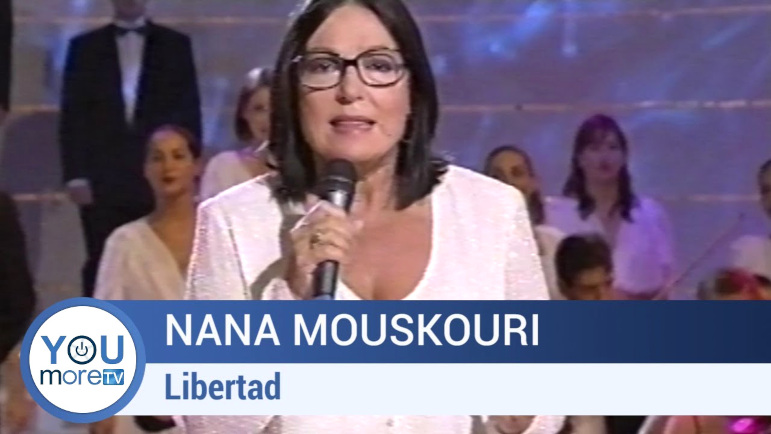
Libertad
A master coup
THE ONE IN SPANISH
After writing about twenty articles on different Nana albums, I wondered if I had forgotten any. That's when "Libertad" came to my mind. The timing is good because it celebrates its 40th anniversary in August 2026. Although it also exists in Portuguese, I will focus on the Spanish one which is better known. So we will see how this project was realized, its ten songs as well as its different covers and awards.
1) A PROJECT TOOK PLACE
|
Julio Iglesias and Nana Mouskouri have been often compared for their exemplary career in several languages. Since her debut, Nana occasionally sang in Spanish without having dedicated an album to it. The realization of this project followed the entry of Spain and Portugal into the European Economic Community in January 1986. To mark this event, an international variety evening was organized at the European Parliament in Strasbourg: La fête en France. It was simultaneously broadcast on French, Spanish and Portuguese channels and Nana was invited. |
As soon as she got the approval from her record company, Nana started studying Spanish again, bringing a dictionary with her. She also learned basic phrases in Portuguese. This lasted several months. In August of the same year, Nana released not only her first album in Spanish, but also another identical one in Portuguese. She immediately flew to Madrid, Miami, Mexico City, Buenos Aires and Rio de Janeiro to promote it. She met the press and participated in television shows.
2) THE CONTENT
With its 10 tracks, the album lasts 36 minutes. The last three of the Spanish version date back a few years. Her many Spanish-speaking admirers had waited a long time for this moment, but they were delighted. For the Portuguese and Brazilians, it was quite a surprise.
01- LIBERTAD As the title and first song, Nana chose "Libertad", from Verdi's "Nabucco", which has been a huge success in several countries. She made a video clip of that song in Spanish, Portuguese and English which was then sent to the television stations all over America. In this video, Nana sings before children strolling with torches, working on scaffolding and unveiling a model of the Statue of Liberty. At the very end, its torch is illuminated. Spain, Argentina and Portugal released the single. |
 |
|
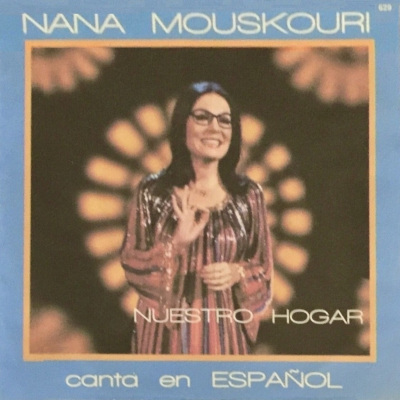
02- NUESTRO HOGAR In a love letter, Quebec singer-songwriter Jean-Pierre Ferland expressed his attachment to his native land. Following her grand return to Greece in 1984, Nana felt more than ever what is coming back home. This piece, which she knew for a long time, perfectly reflected this reality. That is why she decided to record it in seven languages. In this version, it can be summed up as: Winter is endless. I hope you to come back home soon and that your warmth fulfill my loneliness. |
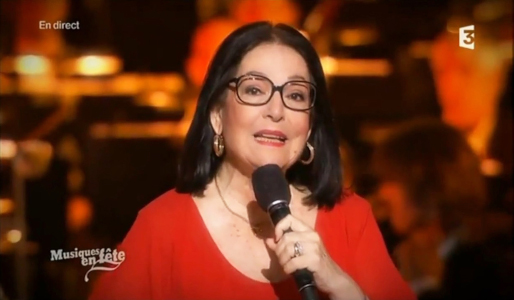
03- LA PALOMA "La paloma", a traditional song composed around 1863 by the Basque Sebastián Iradier, has been covered more than 2,000 times. Before recording it, Nana had performed it in English and French for television. Upon its release, Nana's version stood out among the others. She often sang it in her concerts, especially during her farewell and birthday tours. How can we forget her performance at the ancient theatre of Orange in 2014, from her moving arrival on stage till her final? |
 |
|
04- JUGUETE DE AMOR Nana has made a real gem of the song which is probably the least known of this collection: "Juguete de amor". A guitar accompaniment and her voice does the rest; the interpretation and the sensitivity with a few "Ay, ay, ay" to express pain. This song is of Chilean origin and Nana has recorded it in four languages. Which is not nothing. A truly exquisite piece to rediscover and listen to again! |
05- LA GOLONDRINA In 1862, the author, Narciso Serradell Sevilla, was exiled during the Second Franco-Mexican War. Its lyrics come from a poem written in Arabic. They use the image of a migratory swallow to evoke nostalgia for the homeland. This is why it became the emblematic song of exiled Mexicans. It has been covered by several great performers. Before that, Nana had recorded it in French under the title "Pour tous les amoureux". On Youtube, just type "La golondrina" to find Nana's sublime interpretation. |
 |
|
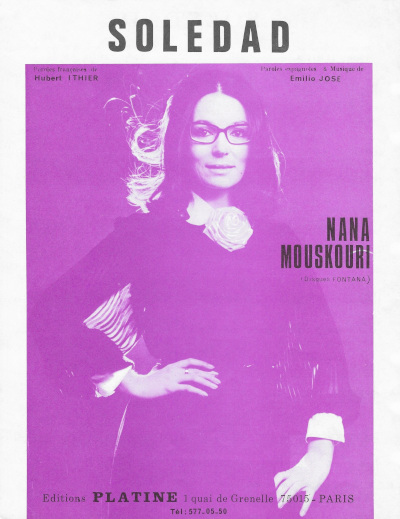
06- SOLEDAD In the mid of 1970s, Nana made a real success in France and Germany with "Soledad", a composition of Emilio José. Upon the make of this album, it was the moment to record it in the original language and in Portuguese. It was released on 45 rpm discs in Spain, Argentina, the United States and in the various artists compilations. On the author's Wikipedia page, it is stated that Nana is the singer who most popularized this song. In Europe, more than two million copies have been pressed. |
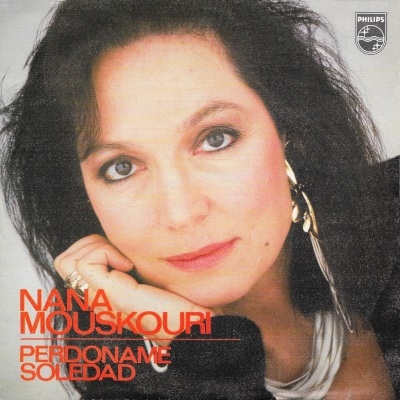
07- PERDÓNAME Of all these songs, "Perdóname" is the only one that was composed for Nana. She owes it to her musical director and arranger Alain Goraguer. The original French version was released in 1977. That year, Nana performed at the Olympia in Paris. Those who attended her concert were taken by the intensity of her interpretation. With its four versions, this song moved as much for its lyrics as for its music. |
 |
|
08- AMAPOLA This 1924 romance is a predilection piece for opera singers. Let's not forget that Nana has a background in classical singing and that this song is one of the first she learned in Spanish. Originally, "Amapola" (poppy) is a long-stemmed flower. In this case, it is a girl's name. Like the flower, she needs love and daylight. This classic is also the title of this album in Japan. |
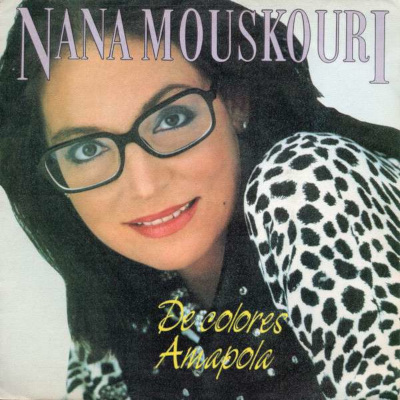
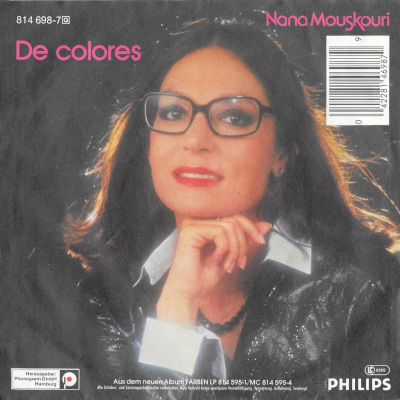
09- DE COLORES This famous folk song appeals to children and adults alike. Its lyrics express joy and celebrate creation with its many colors. Whether it is birds, the rainbow and loves. With its rich musical accompaniment, Nana did it wonderfully. On stage, she introduced it by saying that music has always been like a rainbow full of beautiful colors and notes without nationality and without borders. In France, Germany, Spain and the United States, it was among the selling cuts and released as a single. |
 |
|
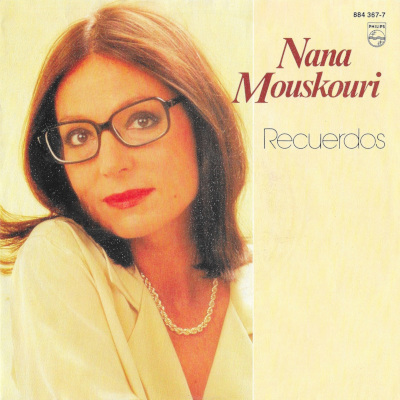
10- RECUERDOS To end this opus, Nana chose "Recuerdos", a classical guitar piece of Francisco Tárrega. She sings it without words on a rhythm that resembles the Ravel's Bolero. Through her voice and the music, we create our own images of memories from the Alhambra, this majestic medieval acropolis located in Granada, Spain. Those who have already been there can easily remember the palaces, rooms, courtyards and gardens. How can we not feel chills while listening to this universal hymn released in each of her albums of different languages? To add to this, it came out on 45 rpm discs in eleven countries. |
3) THE COVERS
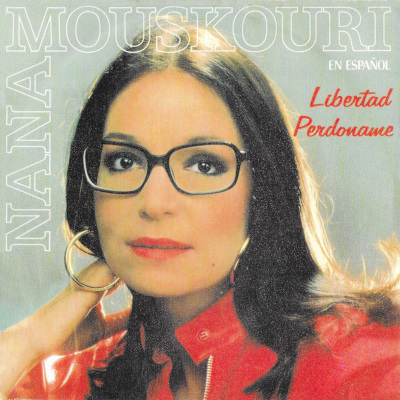
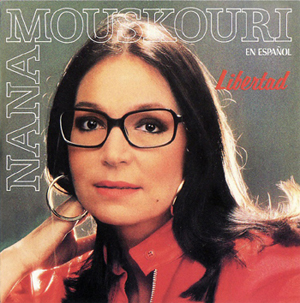
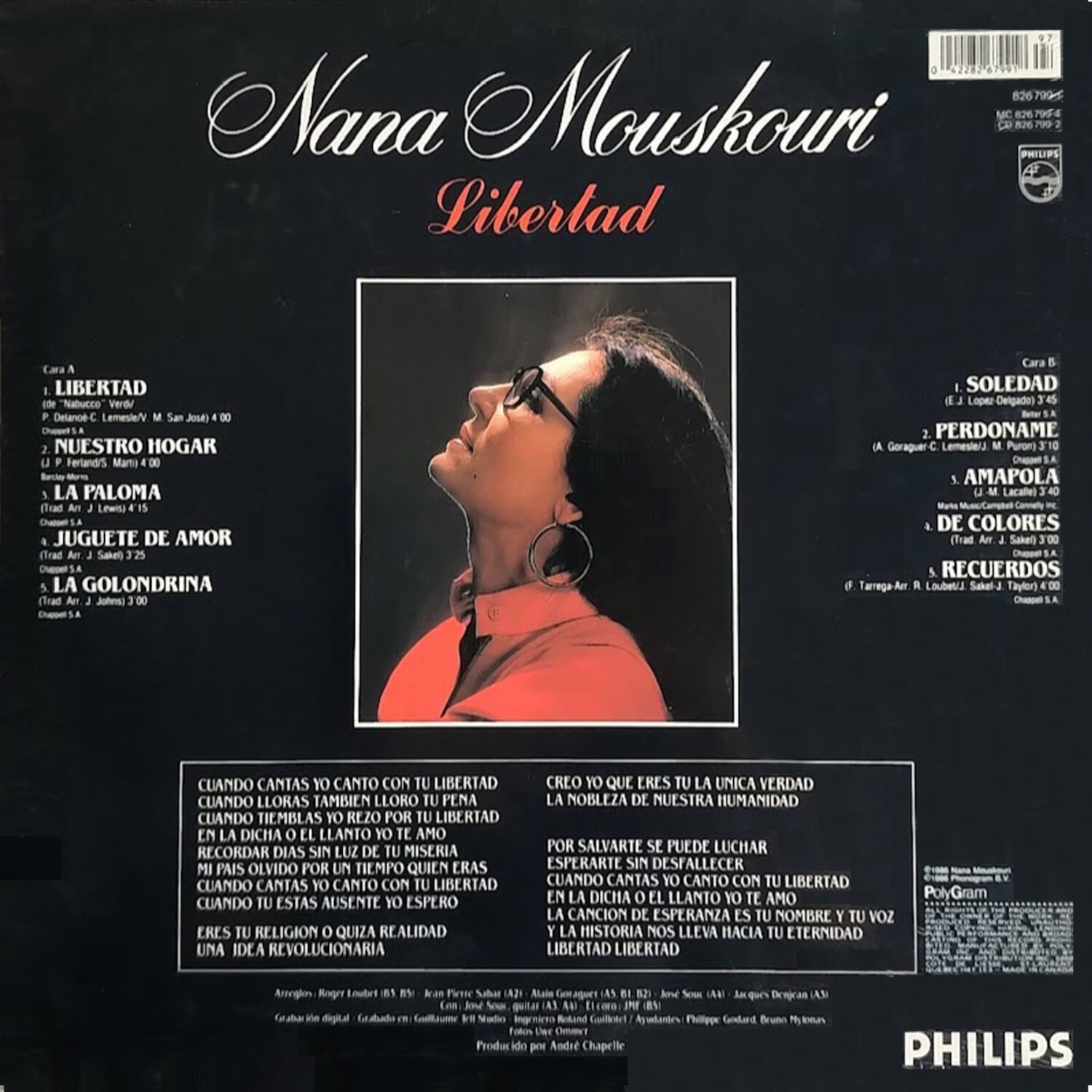
On the original cover, Nana appears in close-up. On the back, in addition to the titles and lyrics of "Libertad", we see her in profile.
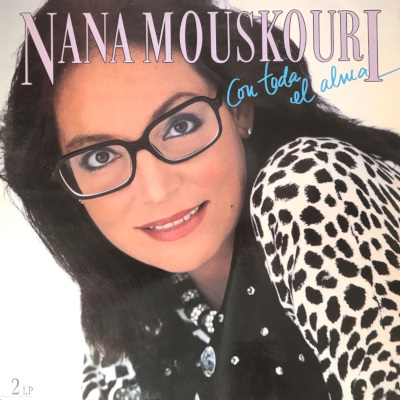
In Spain, it was also paired with a compilation and became "Con toda el alma". This double album was released with a gatefold and single cover, with, inside, the view of a shore at sunset. For the cover, the same photo of her last LP "Tu m'oublies" was used.
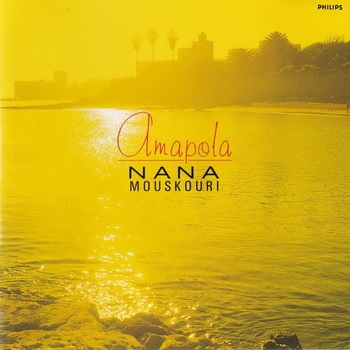
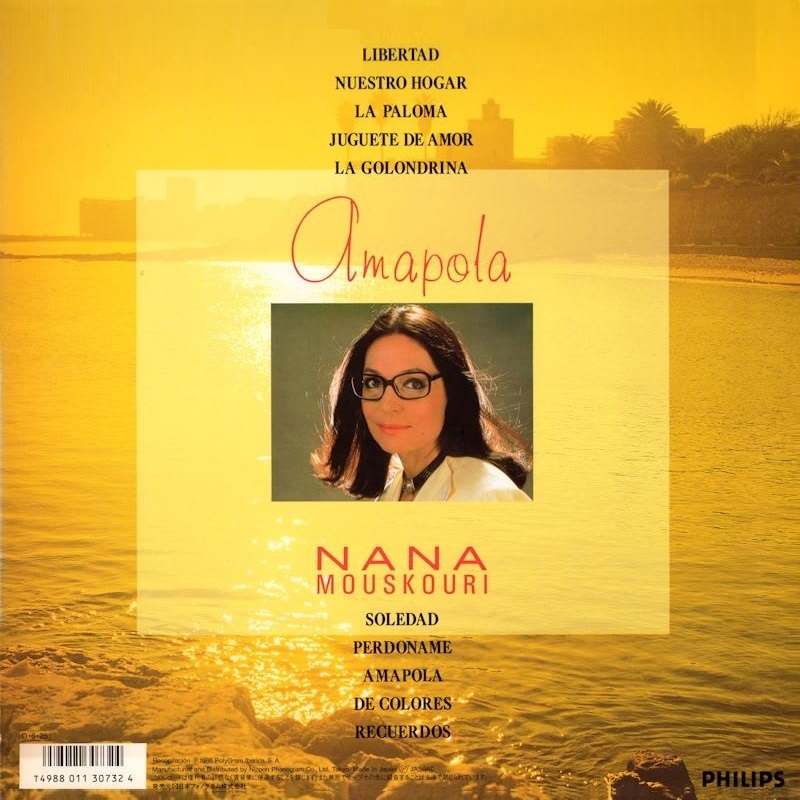
In Japan, the cover is yellow and it is called "Amapola". On the cover, there is a river in front of an Oriental city. On the back, a photo of Nana has been added. As with most Japanese albums, an insert with lyrics is included.
In 2008, it was released as a digipack CD with seven bonus tracks in her Spanish Integral "Alma latina - Todas sus grabaciones".
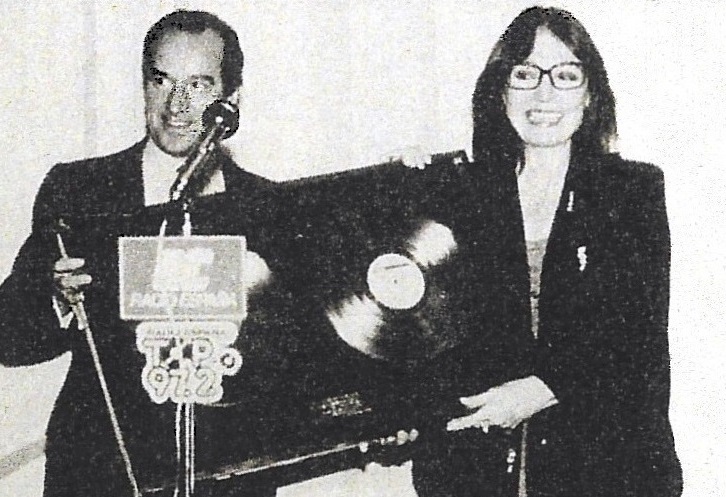
4) AWARDS Of this album it is said that it was a shot in the dark which turned into a master coup. And rightly so, because it was pressed in 16 countries and sold more than a million copies. In fact, the numerous awards don't lie. Here are some of them. In Argentina, it was double platinum (120,000 copies) and in Chile, quintuple platinum (125,000 copies). In Spain, it was gold (50,000 copies) and "Con toda el alma", triple platinum (300,000 copies). And how many others whose number are not known? |
 |
ONE OF HER BEST SELLERS
Even though Nana had already recorded most of these songs in other languages, her fans were satisfied with this mini concert on disc. They even found that Spanish suits her very well. On this subject, she declared that, along with Greek, it is the most beautiful language to sing in. The success of "Libertad" has far exceeded expectations since it became one of her best sellers. To date, Nana has released six albums in Spanish.