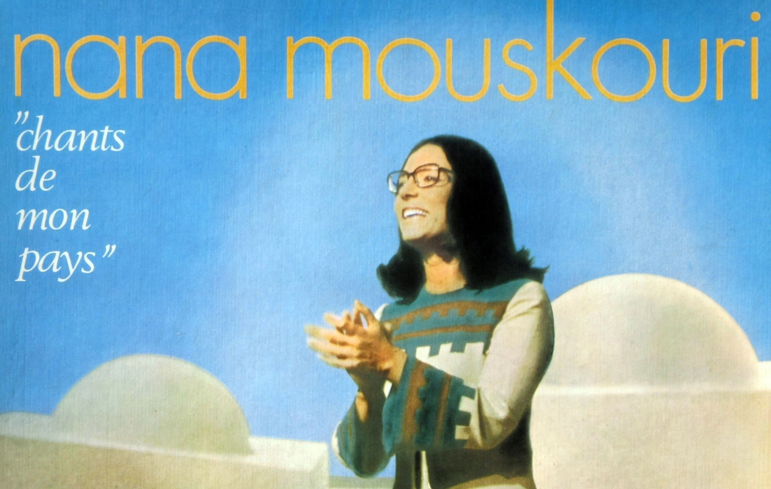
Songs of my Country
Collection 2
SECOND OF THREE INTERNATIONAL ALBUMS IN GREEK
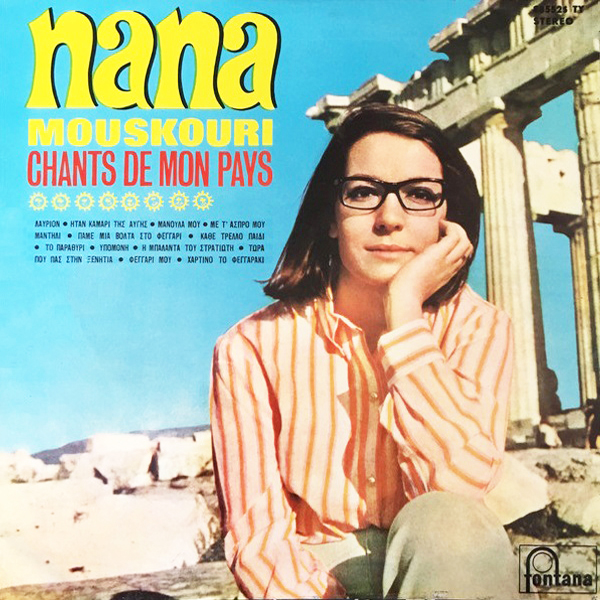
Listening to Nana sing in her native language means discovering her as her compatriots knew and see her. Indeed, before becoming an ambassador of music in the world, she began her career in Greek. Among her sixteen Greek albums, three targeted an international public. As mentioned on the back cover of the one in question here follows her first collection "My favourite Greek Songs". Its title varies between countries and the spoken language there. The original is titled "Chants de mon pays" and was released in France in September 1966. Let’s explore its content, its various covers and its journey.
1) THE CONTENT
The album, produced by Claude Dejacques, includes twelve songs: six by Manos Hadjidakis, three by Mikis Theodorakis, one by Mimis Plessas, Stavros Xarhakos and Georges Petsilas. More folkloric than the previous one, it is less focused on her commercial successes. Moreover, there are only three tracks that Nana had already recorded. In addition, its orchestration, more sober, is closer to that with which Nana’ audience is more familiar. Her ensemble, The Athenians, led by her husband, Georges Petsilas, will accompany her for years throughout the world.
|
Side 1
01- Vrexi stin ftoxo gitonia |
Side 2
01- To parathiri |
|
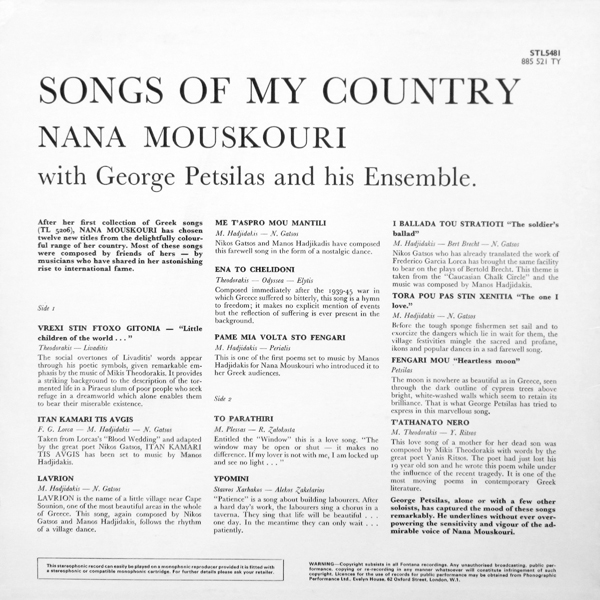
In the years following the release of the album, her public was particularly seduced by three titles: "Vrexi stin ftoxo gitonia" (It’s raining in the poor neighborhood), dedicated to refugee children from a neighbourhood of Piraeus. "Fengari mou" (My moon), which refers to the beauty of the moon. And "Ypomoni" (Patience), song of the workers interpreted in chorus after a hard day's work. One day, life will be better, but we must be patient. It's astonishing that "Strosse to stroma sou", her most recent Greek hit recorded in five languages, is not there.
Among the early successes that Nana has sung the most in her career, there are "Pame mia volta sto fengari" (Let's go for a walk on the moon) and "Tora pou pas stin xenitia" (Now that you are going abroad).
|
PAME MIA VOLTA STO FENGARI It was one of the first songs that made Nana famous in her country. It was composed for her by Hadjidakis following their first meeting in 1958. Like many of his Greek texts, it refers to the moon that makes us dream. |
TORA POU PAS STIN XENITIA This song, interpreted in the festivities, aims to dismiss the fear of sponge fishermen who have to go back to sea. It’s one of the five titles that Nana performed in the documentary "Traumland der Sehnsucht" (Greece, Dreamland of Desire) which won a Silver Bear at the Berlin Film Festival in 1961. |
 |
2) THE DIFFERENT COVERS
The LP, pressed in 12 countries, has no less than five different covers.
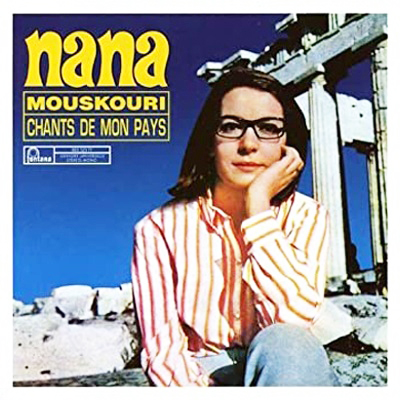
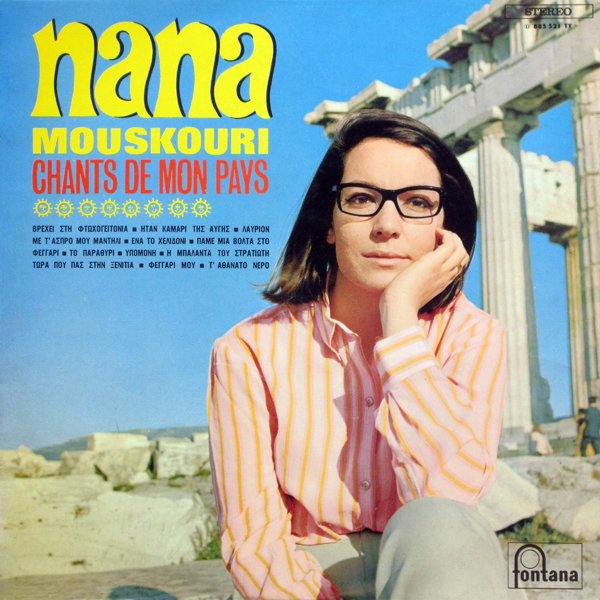
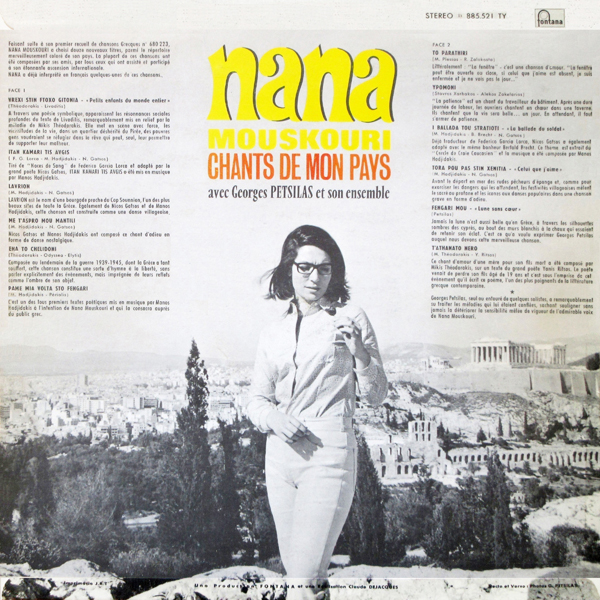
THE ORIGINAL On the original cover, Nana appears in front of the Parthenon. She is wearing a pink and yellow blouse and beige pants. Her name is printed in yellow and the title in orange. On the back, she’s photographed on Philopappos Hill which offers a superb view of the Acropolis. The photo is in black and white, but her name and the title are in color. In addition, a blurb accompanies each title. This allows those who don’t speak Greek to get an idea of the songs. Note that both photos were taken by her husband for this cover. They have something to make us dream of, to make us want to go to Greece. |
  |
|
GREECE As its release in Greece coincided with the beginning of the military junta, its content had to be changed, because several poets and musicians were banned. Among them, Mikis Theodorakis. Consequently, his three songs ("Vrexi stin ftoxo gitonia", "Ena to chelidoni" and "T'athanato nero") were replaced by others from Hadjidakis ("Manoula mou", "Kathe trello pedi" and "Hartino to fengaraki"). Obviously that changed a bit the order of the songs. The cover remained similar to the original, but without the blurbs on the back. |
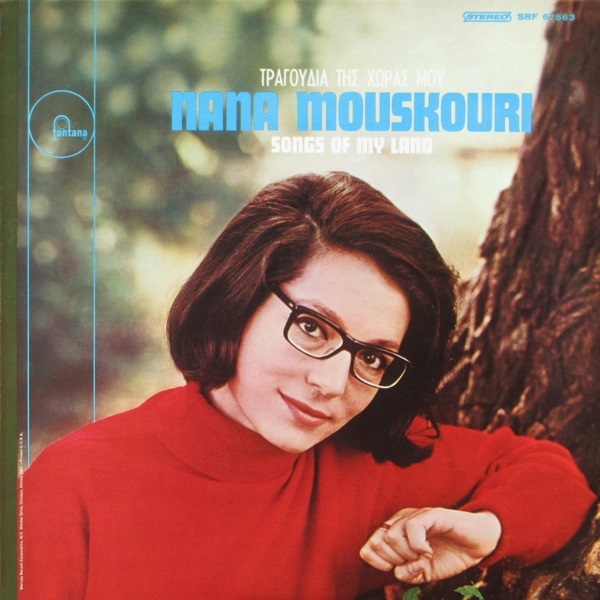
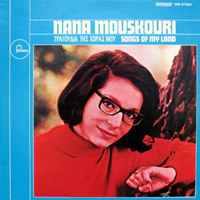
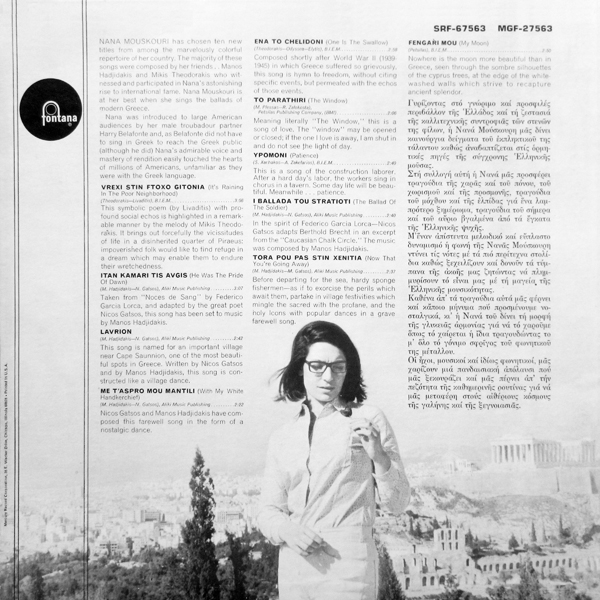
UNITED STATES & CANADA In May 1967, it was the Americans' turn to get it. There, its presentation is different and it bears the title "Songs of my Land". On the cover, Nana is wearing a red sweater and she stands beside a tree trunk. In Canada, a special edition was released under the Mercury label with a blue outline. The back is the same as in the United States, with the texts in English. Both have ten songs rather than twelve. "Pame mia volta sto fengari" and "T'athanato nero" are missing. |
   |
|
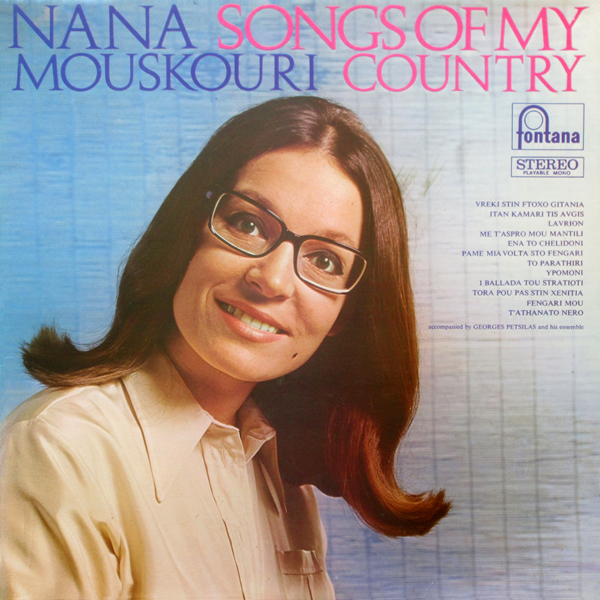
ENGLAND As for the English, they released their version: "Songs of my Country" with a nice exclusive photo. All smiles, Nana is wearing a beige blouse. The background is blue-gray. Her name is written in blue and the title in pink. On the back, no visual, only the presentation of the songs translated differently. With the original cover, it is the most used in other countries. |
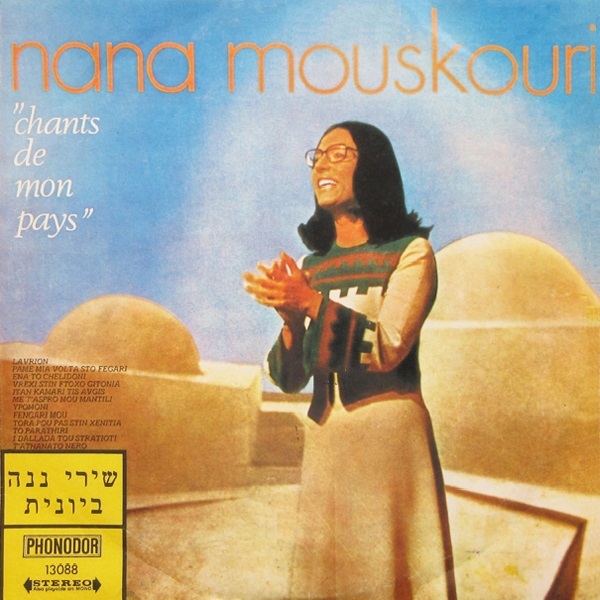
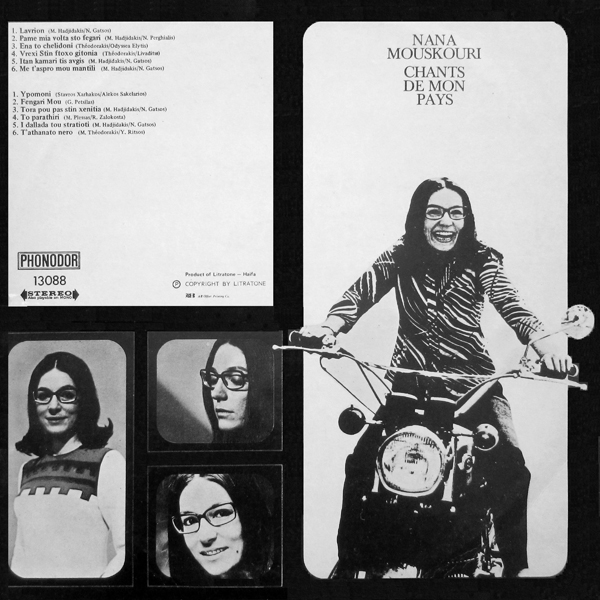
ISRAEL In 1975, "Chants de mon pays" was still part of Nana's active catalog. That year, the Israeli firm released it with the cover of the Dutch double album. The cover: Nana in front of a Greek decor. The back: the inside left page with various black and white photos. Note: the order of the songs is different. |
  |
|
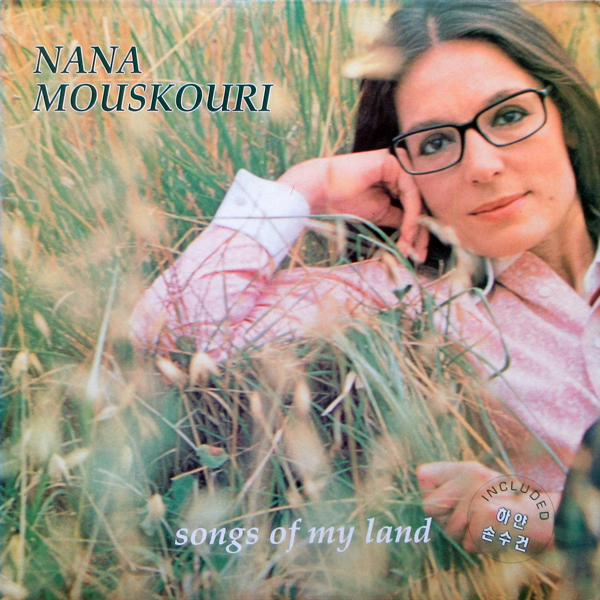
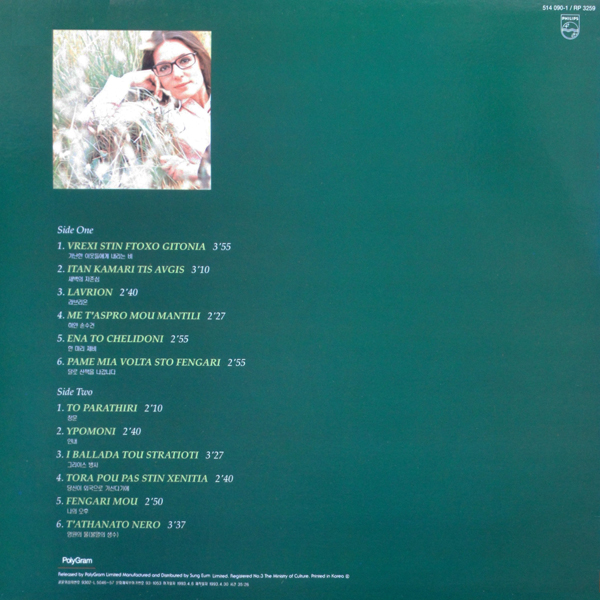
SOUTH KOREA In 1993, the last vinyl version came out in South Korea: "Songs of my Land". On the cover, Nana is sitting on the grass. On the green back, appears the same photo in small format and the titles. It should be mentioned that there "Me t’aspro mou mantili" is considered as one of the melodies of the century. That's why Nana has recorded it in Korean. |
DOUBLE
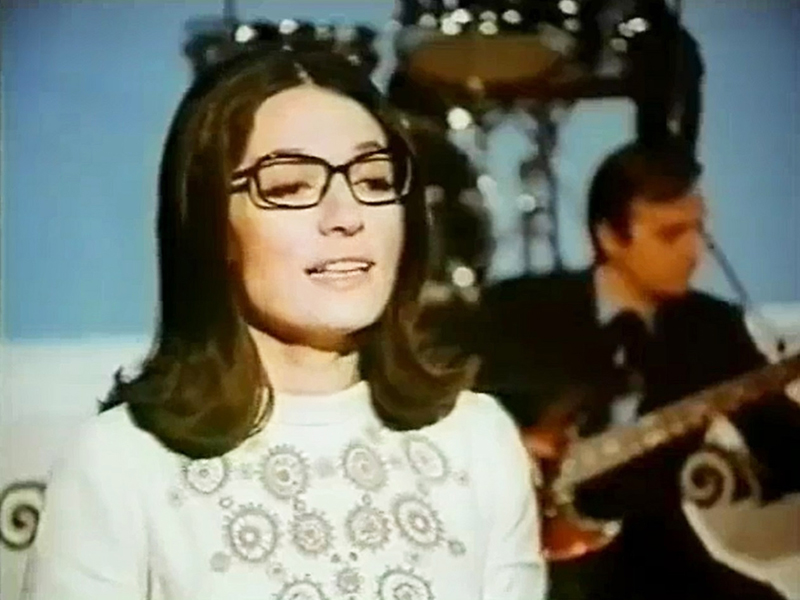
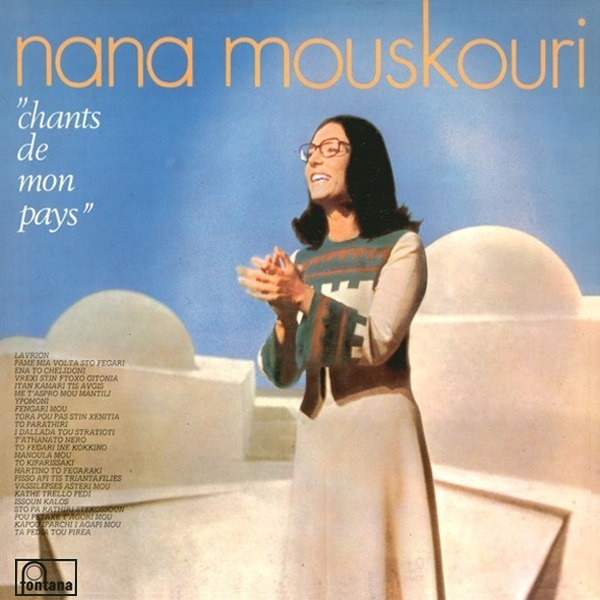
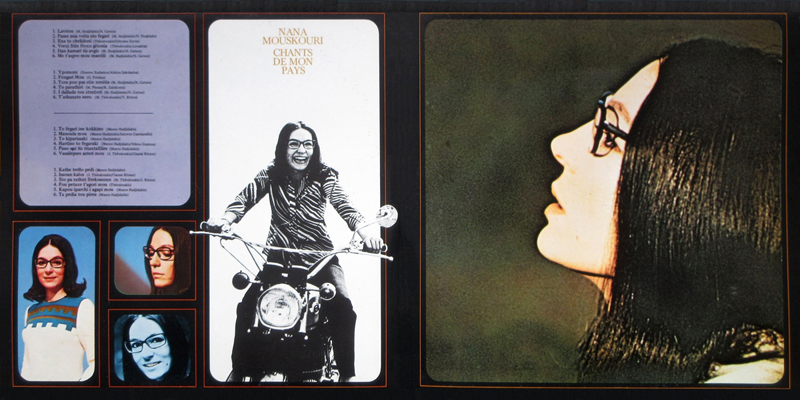
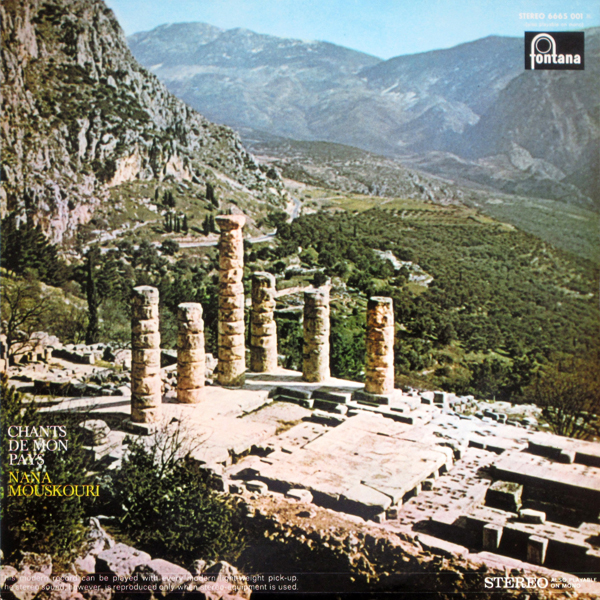
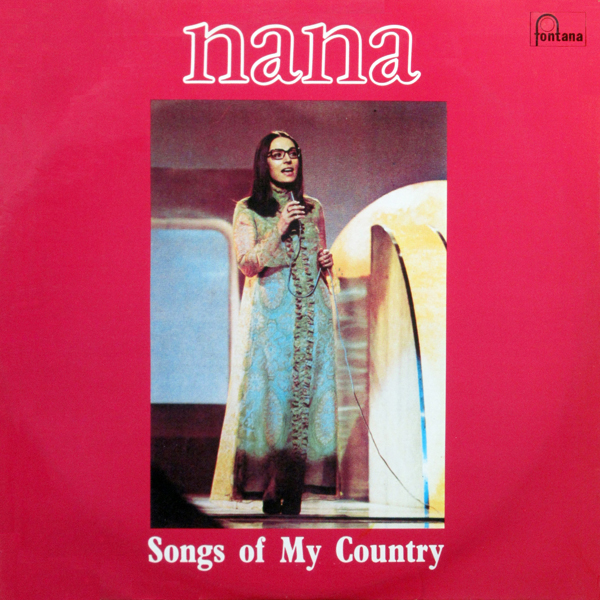
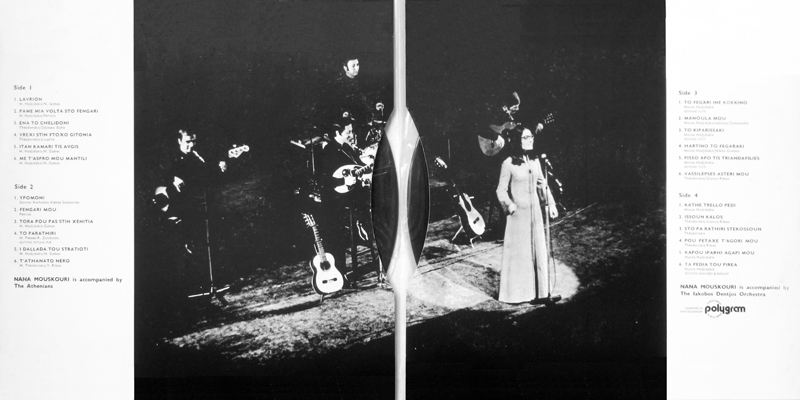
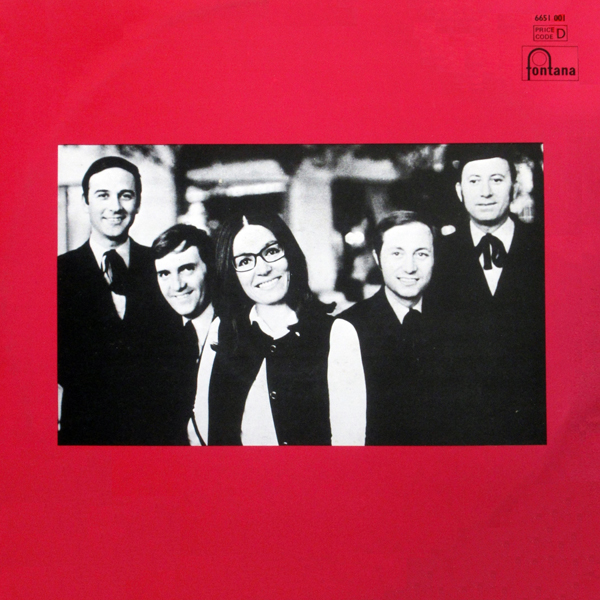
In addition to all these interesting issues, "Chants de mon pays" was also released as a double album with "Mes plus belles chansons grecques". The most common, the one with the photo in front of a decor of white domes. Inside the Dutch sleeve, there are various small photos and a larger one taken from the side. On the back, the ruins of the temple of Apollo at Delphi. In France, the two LPs are integrated in a box set with an insert. And in New Zealand, "Songs of my Country" came out with a gatefold red cover. In the main photo, Nana is singing in a TV studio. On the back, she is with The Athenians. Inside, there is a large photo taken on stage. For each of these editions, the order of the songs has been changed.
3) ITS JOURNEY
AWARD
This album received many praises from those interested in Greek songs, such as Luis, this Chilean admirer. As soon as he discovered this record, he was amazed by her voice, her performance and began to learn the language. In 1974, when Nana was at the height of her popularity in Australia, "Songs of my Country" was one of her 19 gold certified albums.
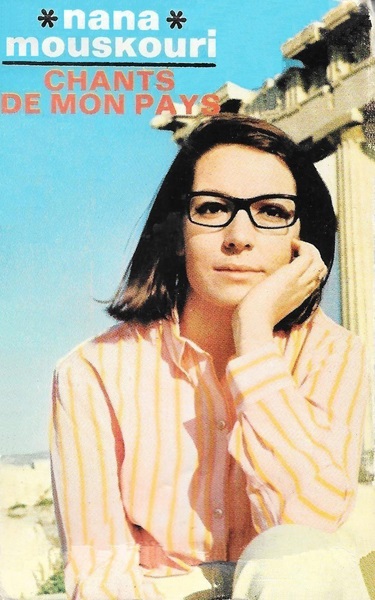
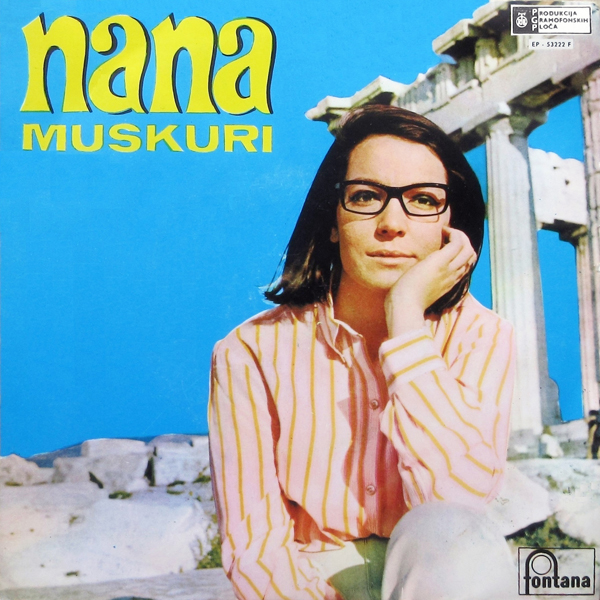
EPs AND TRANSLATIONS In addition, it generated two EPs: a cassette in France and a 45 rpm in Yugoslavia "Pesme moje zemlje". In all, eight of the twelve songs have been released on 45 rpm discs. Over the years, Nana has recorded five of these songs in French. |
  |
|
CD From 1993 the album was released on CD. First, in South Korea. Then in Greece with their own version. And in 2004, it was paired with "Le jour où la colombe…" as digipack CD for her French Integral. |
A MAGNIFICENT REPERTOIRE
To conclude, I would like to point out that for Nana, recording an album in her native language is an opportunity to see that she hasn’t lost her roots. In addition, this second Greek collection distributed on all five continents, allowed her audience and fans of world music to know a sample of this superb repertoire. Everywhere, it was well received. Some firms even wanted to adapt it by translating the title and modifying its presentation. Of course, the essential remains the recording. While writing this article, I was pleased listening to it again entirely and I understand perfectly the emotion it must have aroused. Hope you will read my next report soon!